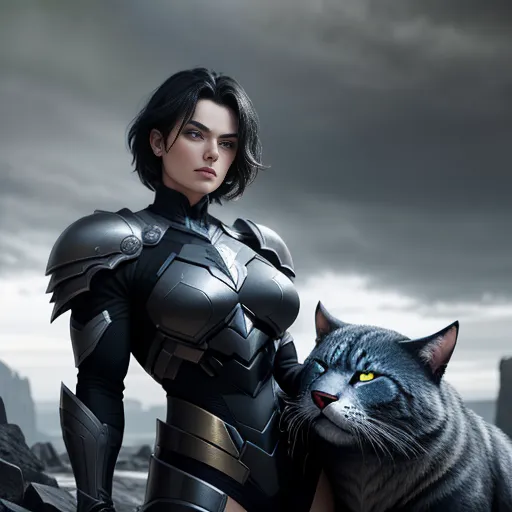
Hellcat: The Crime-Fighting Feline – Powers and Abilities

quebec-oui.org – Hellcat, also known as Patsy Walker, is a superheroine from Marvel Comics whose journey from a teen romance comic character to a formidable crime-fighter is as unique as it is inspiring. With her feline agility, keen senses, and indomitable spirit, Hellcat has carved out a niche for herself in the Marvel Universe. Her evolution from a comic book starlet to a superhero reflects her tenacity and versatility, making her a beloved character among fans.

Origins and Background

Patsy Walker’s origins are steeped in comic book history. She first appeared in the 1940s as a character in a teen romance series, embodying the quintessential girl-next-door persona. However, her story took a dramatic turn when she transitioned into the superhero realm. This transformation was spurred by her fascination with superheroes and a chance encounter with the Avengers.

Her desire to become a hero was realized when she discovered and donned the costume of the retired superheroine, the Cat. Taking on the mantle of Hellcat, Patsy embraced her new identity, complete with enhanced abilities and a fierce determination to fight crime.

Powers and Abilities

Hellcat possesses a range of powers that make her a formidable opponent. Her costume grants her enhanced agility, strength, and reflexes, akin to those of a cat. She also has retractable claws for climbing and combat, as well as heightened senses that aid her in detecting danger and navigating complex environments.

In addition to her physical abilities, Hellcat has a strong will and sharp intellect. She has trained extensively in martial arts and self-defense, further enhancing her capabilities as a crime-fighter. Her experience working alongside superheroes like the Avengers and Defenders has honed her skills, making her a versatile and strategic hero.

Journey as a Superhero

Hellcat’s journey as a superhero is marked by both triumphs and challenges. She has been a member of several superhero teams, including the Avengers and the Defenders, where she has proven her worth time and again. Her adventures often involve battling supernatural threats, reflecting her deep connection to the mystical and magical aspects of the Marvel Universe.

Beyond her superhero exploits, Patsy Walker’s personal life adds depth to her character. Her struggles with mental health and relationships are portrayed with authenticity, making her relatable to readers facing similar challenges. This blend of realism and heroism has endeared Hellcat to fans, who admire her resilience and complexity.

Hellcat’s Impact and Legacy

Hellcat represents the power of reinvention and the courage to pursue one’s dreams, no matter the odds. As a character who transitioned from romance comics to the superhero genre, she embodies the idea that anyone can become a hero with determination and heart. Her story highlights themes of empowerment, self-discovery, and the importance of staying true to oneself.

Hellcat’s influence extends beyond the pages of comics. She has been featured in various media, including animated series and live-action adaptations like “Jessica Jones,” where her character was reimagined for a new audience. Her presence in these adaptations has introduced her to a broader audience, further cementing her status as a pop culture icon.

Conclusion

Hellcat’s transformation from a comic book character to a superhero is a testament to her enduring appeal and adaptability. Her journey is one of growth, courage, and the relentless pursuit of justice. As the crime-fighting feline of the Marvel Universe, Hellcat continues to inspire fans with her dynamic spirit and unwavering commitment to doing what is right. Her legacy as a fearless and multifaceted hero is one that will continue to resonate with audiences for generations to come.
Commodus: The Mad Emperor – Characteristics and Reign

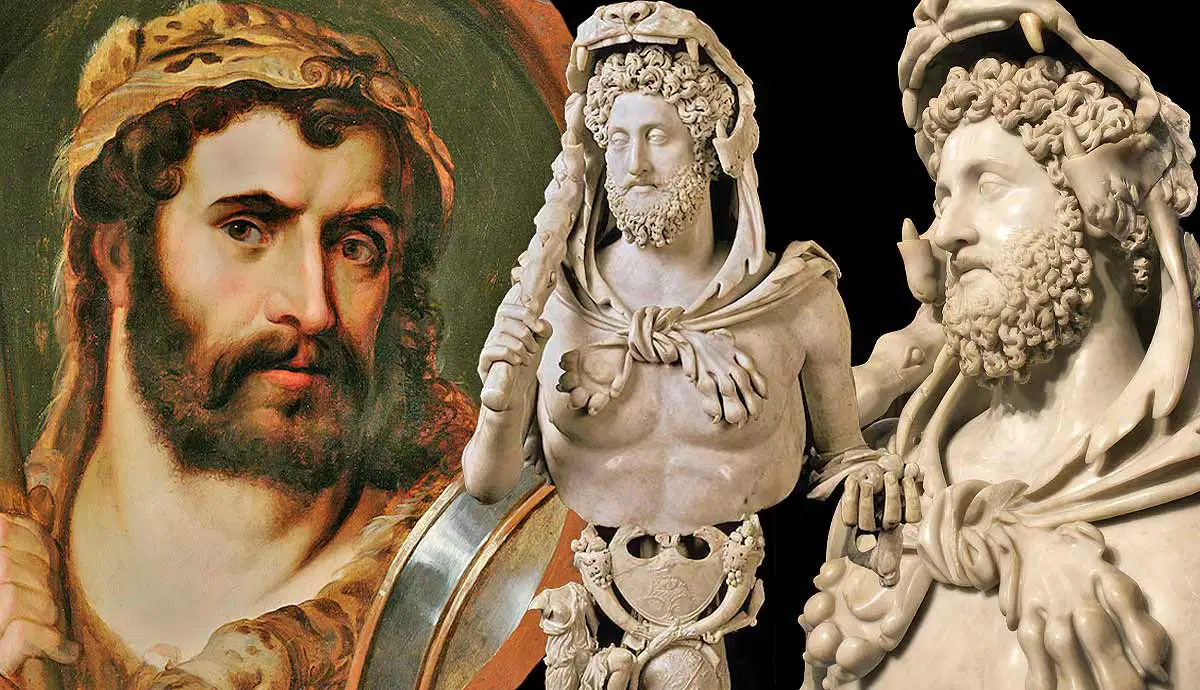
quebec-oui.org – Commodus, often dubbed “The Mad Emperor,” ruled as Roman Emperor from 180 to 192 AD. His reign marked the end of the Pax Romana, a period of relative peace and stability throughout the Roman Empire. Known for his eccentric behavior and tyrannical rule, Commodus’s leadership is often cited as a contributing factor to the Roman Empire’s eventual decline. This article explores his tumultuous reign, distinctive characteristics, and the impact of his leadership on Roman history.

Early Life and Rise to Power

Born in 161 AD, Commodus was the son of the esteemed Emperor Marcus Aurelius. His ascent to the throne was part of a dynastic succession, as he was named co-emperor alongside his father at the age of 16. Commodus became the sole ruler upon his father’s death in 180 AD. Unlike his father, who was known for his philosophical wisdom and effective governance, Commodus quickly gained a reputation for neglecting state affairs in favor of personal indulgence and entertainment.

Characteristics and Reign

Commodus’s reign is characterized by his erratic behavior and self-indulgence. He is infamously remembered for his fascination with gladiatorial combat, often participating in the arena himself and styling himself as a living god. Commodus’s focus on personal glory and extravagance led to widespread corruption and administrative neglect. His leadership style alienated the Senate and the military, causing political instability and unrest throughout the empire.

Cultural Impact and Legacy

The legacy of Commodus is one of infamy. His reign is often viewed as a turning point that marked the beginning of the Roman Empire’s decline. Commodus’s life and rule have been dramatized in various forms of media, most notably in the 2000 film “Gladiator,” where he is portrayed as a capricious and ruthless ruler. His story serves as a cautionary tale about the dangers of unchecked power and the consequences of prioritizing personal ambition over the welfare of the state.

Conclusion

Commodus, “The Mad Emperor,” remains a compelling figure in Roman history. His reign, marked by personal excess and political turmoil, contrasts sharply with the stability and prosperity of his predecessors. While his leadership contributed to the challenges faced by the Roman Empire in subsequent years, his story continues to captivate historians and enthusiasts, offering insights into the complexities of leadership and the fragile nature of power.

Moonstone: The Shining Supervillain of Marvel Comics

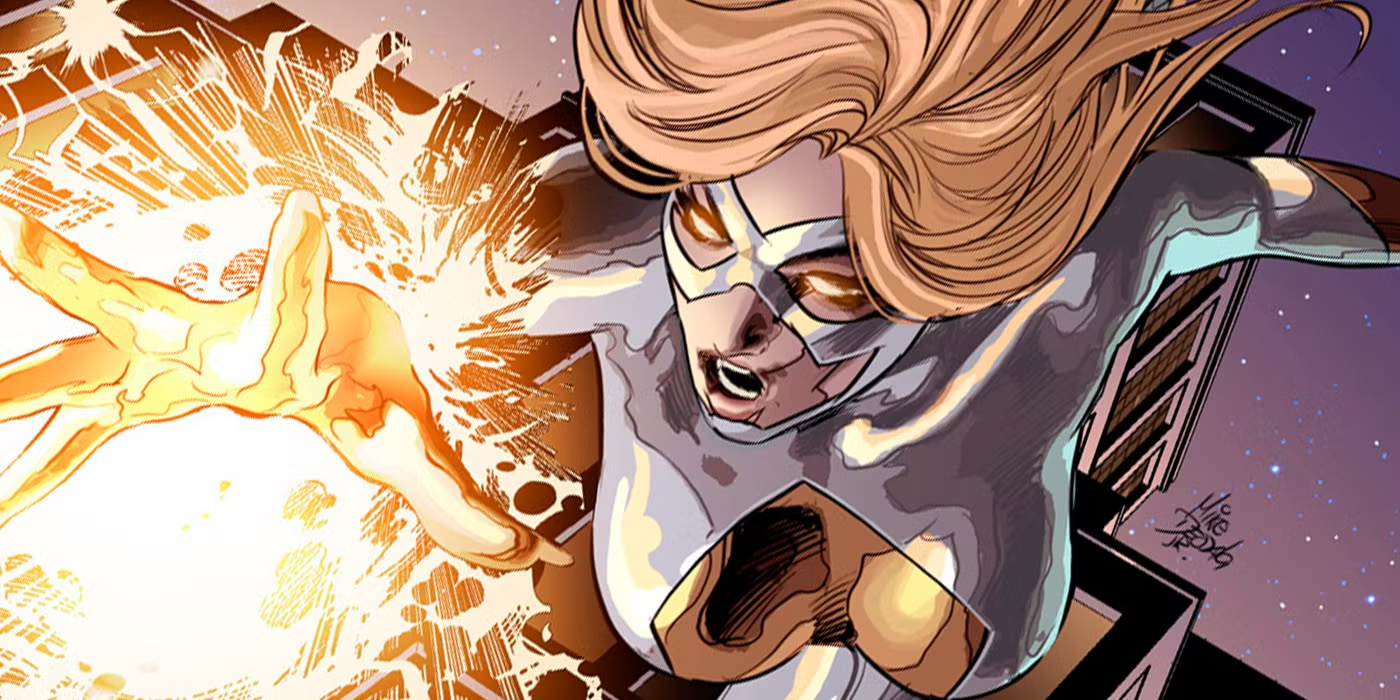
quebec-oui.org – Moonstone, a complex and multifaceted character in the Marvel Comics universe, is known for her cunning intelligence, psychological manipulation, and powerful abilities. Often clashing with heroes like the Avengers and Captain Marvel, Moonstone’s journey from psychiatrist to supervillain is a story of ambition and moral ambiguity.

Origins and Background

Moonstone, whose real name is Dr. Karla Sofen, was created by writer Marv Wolfman and artist Frank Robbins, making her first appearance in “Captain America” #192 in 1975. Initially introduced as a psychologist with a penchant for manipulation, Dr. Sofen’s life changes dramatically when she acquires a powerful alien gemstone, giving her superhuman abilities and transforming her into the villainous Moonstone.

Powers and Abilities

The alien gem that grants Karla Sofen her powers is the source of her formidable abilities. As Moonstone, she possesses superhuman strength, speed, and durability, as well as the ability to fly and phase through solid objects. Her powers also include energy projection, allowing her to unleash powerful blasts. In addition to her superhuman abilities, Moonstone’s background as a psychologist makes her a master manipulator, capable of exploiting the weaknesses of her enemies.

Role in the Marvel Universe

Moonstone has been a member of several villainous groups, most notably the Masters of Evil and the Thunderbolts. Her affiliation with the Thunderbolts is particularly significant, as the team was initially formed by villains masquerading as heroes. Throughout her tenure with the Thunderbolts, Moonstone’s character oscillates between heroism and villainy, often driven by her own self-interest and ambition.

Conflict and Transformation

Moonstone’s character is defined by her constant struggle between ambition and morality. Her desire for power often leads her into conflict with superheroes, but her intelligence and cunning make her a challenging adversary. Over time, Moonstone has shown glimpses of redemption, occasionally aligning with heroes when it suits her needs, adding layers to her complex persona.

Cultural Impact

Moonstone has appeared in various Marvel media, including animated series and video games. Her character is notable for challenging traditional female villain stereotypes, offering a narrative rich with psychological intrigue and moral complexity. Moonstone’s storylines often explore themes of power, identity, and redemption, making her a compelling figure in the Marvel Comics universe.

Conclusion

Moonstone remains one of Marvel’s most intriguing and multifaceted villains, her journey marked by ambition, power, and psychological depth. As both a formidable foe and a potential ally, Moonstone’s presence in the Marvel Universe continues to captivate fans, ensuring her place as a memorable and enduring character.

Faora: The Fearsome Kryptonian Warrior

quebec-oui.org – Faora is a formidable supervillain in the DC Comics universe, often depicted as a powerful adversary of Superman. Known for her fierce combat skills and unwavering loyalty to General Zod, Faora represents the darker aspects of Kryptonian strength and ambition. Her character embodies themes of loyalty, power, and the complex dynamics of war and survival.

Origins and Background

Faora first appeared in “Action Comics” #471 in 1977, created by writer Cary Bates and artist Curt Swan. She is a Kryptonian, like Superman, but her life trajectory is starkly different. In various continuities, Faora is often depicted as a war criminal from Krypton who survived the planet’s destruction by being imprisoned in the Phantom Zone, a dimension used to incarcerate Krypton’s most dangerous criminals.

Abilities and Characteristics

As a Kryptonian, Faora possesses powers similar to Superman’s when exposed to Earth’s yellow sun, including superhuman strength, speed, durability, and the ability to fly. However, what sets her apart is her exceptional hand-to-hand combat skills, making her an even more dangerous opponent. Her tactical acumen and ruthless efficiency in battle make her a fearsome adversary to any who oppose her.

Faora in DC Storylines

Faora has appeared in numerous storylines, often as a lieutenant or ally to General Zod. Her loyalty to Zod and their shared goal of subjugating Earth make them a persistent threat to Superman and his allies. In the storyline “Superman: Last Son,” Faora is one of the leaders of a Kryptonian invasion of Earth, showcasing her strategic mind and combat prowess.

Themes and Symbolism

Faora’s character explores themes of loyalty, power, and survival. Her allegiance to Zod highlights the complexities of loyalty and authority, while her combat skills and strategic mindset emphasize the primal nature of survival and dominance. Faora’s presence in the DC universe serves as a reminder of the potential for both great good and great evil inherent in power.

Faora in Other Media

Faora’s character gained wider recognition through her portrayal in the 2013 film “Man of Steel,” where she was depicted by actress Antje Traue. In the film, Faora is a key figure in General Zod’s attempt to terraform Earth into a new Krypton, showcasing her as a ruthless and skilled warrior. Her performance brought a new dimension to the character, emphasizing her strength and strategic intelligence.

Conclusion

Faora remains a compelling villain in the DC universe, challenging heroes with her strength, intelligence, and unwavering dedication to her cause. Her character serves as a powerful exploration of the duality of power and the complexities of loyalty, making her a memorable and enduring figure in the world of comics and beyond.