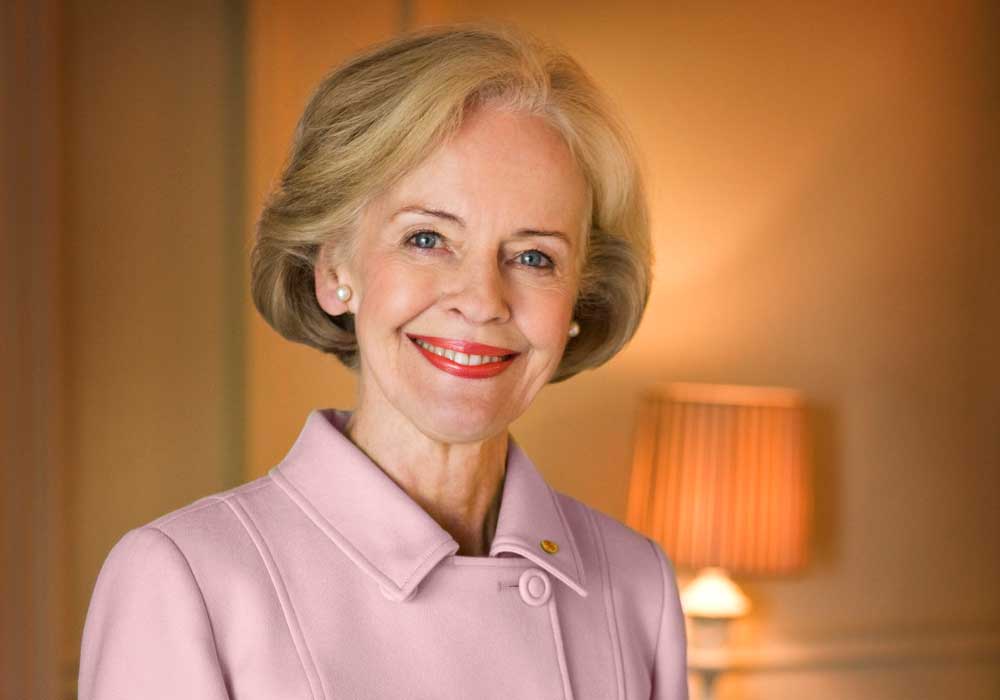
Quentin Bryce: Governor-General of Australia (2008–2014)

quebec-oui.org – Quentin Bryce, a prominent figure in Australian history, served as the 25th Governor-General of Australia from 2008 to 2014. As the first woman to hold this distinguished position, her tenure marked a period of significant cultural and social shifts in Australia.

Early Life and Career

Quentin Alice Louise Bryce was born on December 23, 1942, in Brisbane, Queensland. Before entering the political sphere, Bryce had a distinguished academic and legal career. She earned a law degree from the University of Queensland and initially worked as a solicitor before turning her attention to public service and social advocacy. Her passion for women’s rights and social justice would define much of her future work.

Appointment as Governor-General

In 2008, Bryce made history when she was appointed as Governor-General by then-Prime Minister Kevin Rudd. She succeeded Major General Michael Jeffery and became the first woman to occupy the position, which holds a ceremonial yet influential role as the Queen’s representative in Australia. Her appointment was met with widespread support, as she was regarded as an advocate for the community, particularly women, children, and Indigenous Australians.

Achievements During Her Tenure

As Governor-General, Bryce was known for her calm and approachable demeanor. She carried out her ceremonial duties with grace and often used her position to highlight important social causes. Throughout her term, she focused on issues such as:

  • Women’s Rights and Equality: Bryce was a strong advocate for women’s participation in leadership roles and gender equality. She championed initiatives that aimed at breaking down barriers for women in various sectors of society, including politics and business.
  • Indigenous Rights and Recognition: Bryce’s tenure coincided with the ongoing conversation around reconciliation and the recognition of Aboriginal and Torres Strait Islander peoples in the Australian Constitution. She supported the need for a more inclusive Australia, acknowledging the historical and contemporary injustices faced by Indigenous communities.
  • Social Justice and Community Engagement: As Governor-General, Bryce regularly engaged with various community organizations, particularly those that worked to improve the lives of the disadvantaged, including children, the elderly, and refugees.

Significant Events and Roles

Bryce’s time as Governor-General saw her involved in various national and international events. Notably, she presided over the 2010 Australian Federal Election, swearing in Prime Minister Julia Gillard after a highly contested race that resulted in a minority government. Her role during this period was crucial in maintaining the stability and function of the government.

Another defining moment came in 2012 when Bryce delivered an emotional address at the National Apology Ceremony for Forced Adoptions, acknowledging the suffering of individuals affected by Australia’s forced adoption policies.

Legacy and Impact

Quentin Bryce’s legacy as Governor-General is marked by her pioneering role as the first woman to hold the office, as well as her advocacy for social justice and equality. She was widely praised for her empathetic leadership and her ability to connect with ordinary Australians. Her tenure is remembered for breaking new ground and championing important causes that continue to resonate in Australian society.

Upon leaving office in 2014, Bryce was succeeded by Peter Cosgrove, marking the end of a distinguished chapter in Australian history. Despite stepping down from her official role, Bryce’s influence on Australian life and her contributions to advancing equality and social justice continue to inspire future generations.

Conclusion

Quentin Bryce’s time as Governor-General of Australia (2008–2014) remains a defining period in the country’s history. Her leadership, advocacy for women and Indigenous communities, and commitment to social justice earned her admiration and respect both at home and abroad. As the first female Governor-General, Bryce broke barriers and set a precedent for future generations of women in leadership roles, leaving a lasting imprint on the nation’s political and social landscape.

The Fascinating World of Kangaroos: Australia’s Iconic Marsupials

quebec-oui.org – Kangaroos are one of Australia’s most iconic animals, recognized worldwide for their distinctive hopping gait and powerful tails. These remarkable marsupials are not only a symbol of the Australian wilderness but also an integral part of the country’s ecosystem. In this article, we will explore the various aspects of kangaroos, including their habitat, behavior, and unique features.

Kangaroo Species and Distribution

Australia is home to several species of kangaroos, with the four most well-known being the Red Kangaroo (Macropus rufus), Eastern Grey Kangaroo (Macropus giganteus), Antilopine Kangaroo (Macropus antilopinus), and the Western Grey Kangaroo (Macropus fuliginosus). These species inhabit a wide range of environments, from the dry, arid regions of the Outback to the lush forests and grasslands of the eastern and southern coasts.

The Red Kangaroo, the largest of the species, is often associated with the vast, red deserts of Australia, while Eastern Grey Kangaroos are more commonly found in forested areas. Kangaroos can also be found in urban environments, where they are seen grazing in parks and golf courses.

Unique Characteristics of Kangaroos

One of the most distinctive characteristics of kangaroos is their powerful hind legs, which are adapted for their remarkable ability to hop. Kangaroos can cover large distances at speeds of up to 35 miles per hour (56 kilometers per hour) in short bursts, using their muscular tail for balance as they move. Their powerful hind legs also allow them to leap over obstacles with ease, making them well-suited for life in the Australian outback.

Kangaroos have large, strong tails that serve a variety of functions, including providing balance while hopping and acting as a counterbalance when moving at high speeds. The tail is also used for communication, with kangaroos sometimes using their tails to communicate with others in their group.

Kangaroo Behavior and Social Structure

Kangaroos are social animals that live in groups known as “mobs.” These mobs are usually made up of females and their young, with dominant males known as “boomers” overseeing the group. The males compete for dominance through displays of strength and aggressive behavior, often engaging in boxing matches where they use their strong forearms to punch each other.

Kangaroos are herbivores, primarily grazing on grasses, leaves, and shrubs. They have specialized teeth for cutting and grinding plant material. They are also known for their ability to survive in harsh, dry environments due to their efficient water conservation systems.

Reproduction and Lifespan

Kangaroos are known for their fascinating reproductive strategies. Female kangaroos can give birth to a single joey at a time, but they have the remarkable ability to delay the birth until environmental conditions are optimal. Once the joey is born, it crawls into the mother’s pouch, where it continues to develop for several months before emerging as a small, but fully formed, kangaroo.

Kangaroos can live for up to 6-8 years in the wild, though many face threats from predators and humans. Their populations fluctuate depending on food availability and environmental conditions, and they play a vital role in maintaining the health of the Australian ecosystem.

Conservation and Threats

Despite being emblematic of Australia, kangaroos face a range of threats, both from natural predators and human activity. While they are not currently endangered, some species, particularly the smaller, less common ones, are vulnerable due to habitat destruction, climate change, and hunting.

The culling of kangaroos is also a controversial issue in Australia, as large populations can lead to overgrazing and damage to agricultural land. However, kangaroos are protected by law in many parts of Australia, and efforts are being made to ensure their long-term survival.

Conclusion

Kangaroos are much more than just a symbol of Australia; they are fascinating creatures that have adapted to some of the harshest environments on Earth. Their unique features, social structures, and behaviors make them an integral part of the natural world. As Australia faces challenges related to climate change and habitat loss, the protection of kangaroo populations will be essential in preserving the health of the country’s ecosystems.